

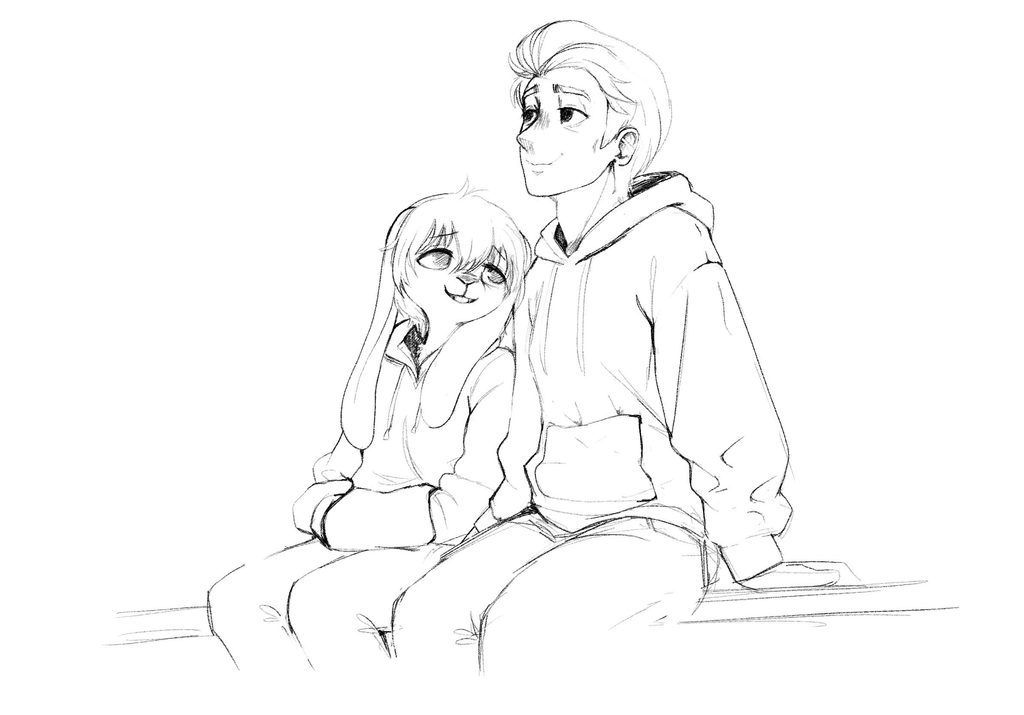
TL;DR: The Leaves of Fall will not conclude on Halloween — a mid-November conclusion is more likely. There is too much remaining content and too many needed additions/improvements for me to meet my deadline.
The Reality of Large Rewrites
I’ve benefited a lot from having a “zero” draft of The Leaves of Fall to write from — like finding a map left by explorers from hundreds of years in the past. Now I get the privilege of following that same map, adding onto it in places the cartographers missed, erasing inconsistencies that can only be seen in a modern lens.
I mean it when I say The Leaves of Fall is largely a rewrite. That first map, left by my past self on SoFurry, is a zero draft by my standards. Readers working through the revised edition on my website or Archive of Our Own are, in effect, reading a “first draft,” of the story — a near-total rewrite of that original zero draft.
Naturally, as I edited, revised, and rewrote the old draft into what you’re reading now, things changed. Sometimes they changed out of necessity, sometimes request, and other times pure aesthetic reasons.
Here’s why all the change is good, and not so good.
Time Constraints and Quality Control Don’t Mix
I am working on Something That Matters: Part Three right now. It is October first. After uploading part three, I will have twenty-four remaining updates to tackle, in thirty days. Doable? Technically, yes. I would have to sacrifice a significant amount of quality and quality control in order for me to hit that deadline, and I am unwilling to do that.
The purpose of the “revised” edition of TLoF, is to expound upon something loved by others, to do the story and its fans justice, and, hopefully end up with something that can endure. If I throw out my goal of improving the story’s writing quality, why am I doing this in the first place?
On a personal note, writing is also just fun for me. If I stopped trying to impress myself every sentence, I’d get bored.
Where All Arrows Point
When you modify a lot of plot threads in the first two acts of your book, you need to make good on the promises you made to the reader when you made those changes. Act three — especially the latter half — is where you need to demonstrate some respect for the reader’s memory, and innate desire to see Chekhov’s gun (or beer bottle) go off.
A lot has changed in The Leaves of Fall since I started the rewrite; there are many yet un-fired circuits that are new to the plot, already buzzing with current. By far, the most significant rewrites are needed in Act Three: Something That Matters, and that’s partially why I have to readjust my deadline.
How to Enjoy Editing
Beyond the work of rewriting almost every single word in a story I penned almost six years ago, I follow a few loose, editorial creeds. All it really is, is advice from Self-Editing for Fiction Writers (Second Edition) by Renni Brown and Dave King, and the results of weekly editing sessions with a one SavantGuarde.
The unfortunate truth is that I love to edit. My few years in the professional editing business are some of the fondest in my adult life. This does not make me good at it by the way. What it does make me, however, is eager to take up the red pen of justice and carve my way through a fresh draft.
Because I consider TLoF dear to myself, and because so many others resonated with the story over the years, I feel an immense responsibility to myself and to my craft to make this thing fucking sing. So I’ve developed an editing process that I hope streamlines my ability to produce quality updates.
Oliver’s Easy Editing Process
When most professional authors sit down to actually write their damned books, they start with a very loose brain, plot, and character dump onto the page. When the author has laid the bones of what will become his or her book out onto the page, and the story has concluded, they have what is called a “zero draft.” Assume your story is now a zero draft.
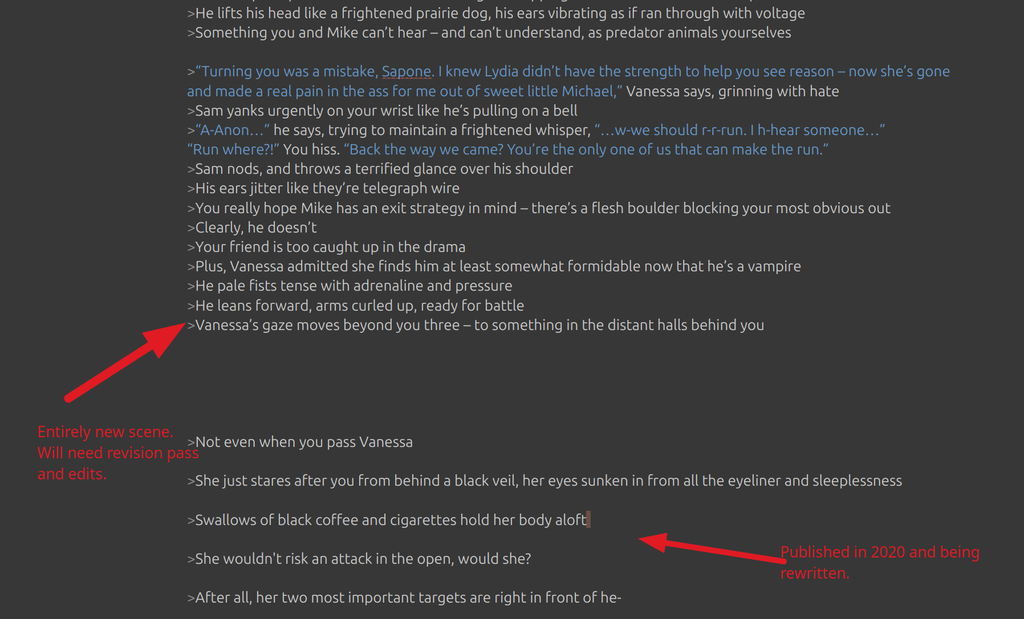
1. Rewrite Your Zero Draft
To the left, you can see a work-in-progress for Something That Matters: Part Three. It’s all being rewritten. Occasionally, I pluck out a few sentences or loose plot threads for salvage.
2. Heavily Edit and Change What You Just Wrote
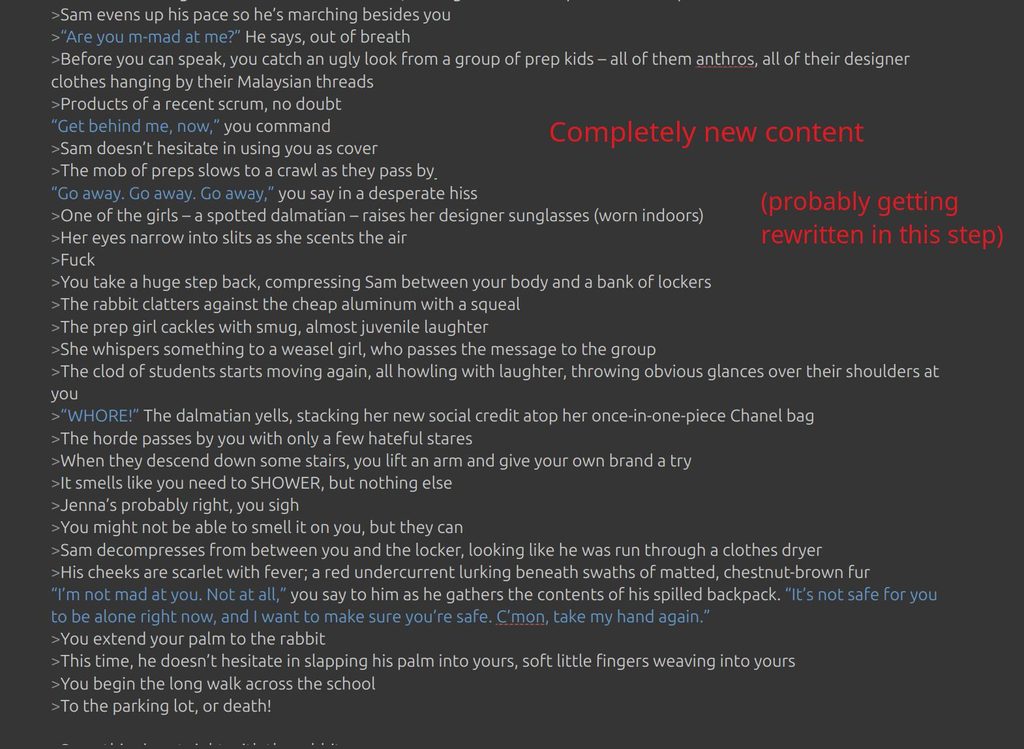
Then, I take the fresh copy I pulled from the zero draft, and sit on it a bit — maybe a day. Then, I start from the top, and edit the whole thing again, shaping it into a “second draft” of sorts. I read my own content aloud when I edit, which helps me identify clunky sentences, bad dialogue, or odd spelling.
3. One Final Read
The last step is a final, verbal read-through. I don’t change too many sentences or scene beats; I stick to the obvious grammar, spelling, and passive voice that always makes it into the “final” draft. And yes, if you’ve read my “final” draft of TLoF, you know by now i’ts not final at all.
Concluding Remarks
I apologize for not meeting my commitment to you all. Instead, I think it’s much more important to produce a quality “second draft” of the story, so that those now and in the future can enjoy it (after yet another editing pass).
Just to reiterate, the story is not pausing. Its conclusion date is being stretched a bit further into November to accommodate necessary quality changes.
Cheers!
Oliver Hart
Author of Foxing, The Leaves of Fall, Liquid Courage, Beating the Heat, A Red Winter, Weber’s Gambit, and many other stories. He primarily writes hmofa, but dabbles in most genres. Interests include, writing, reading, technology, and music.
Stories: Foxing, The Leaves of Fall